
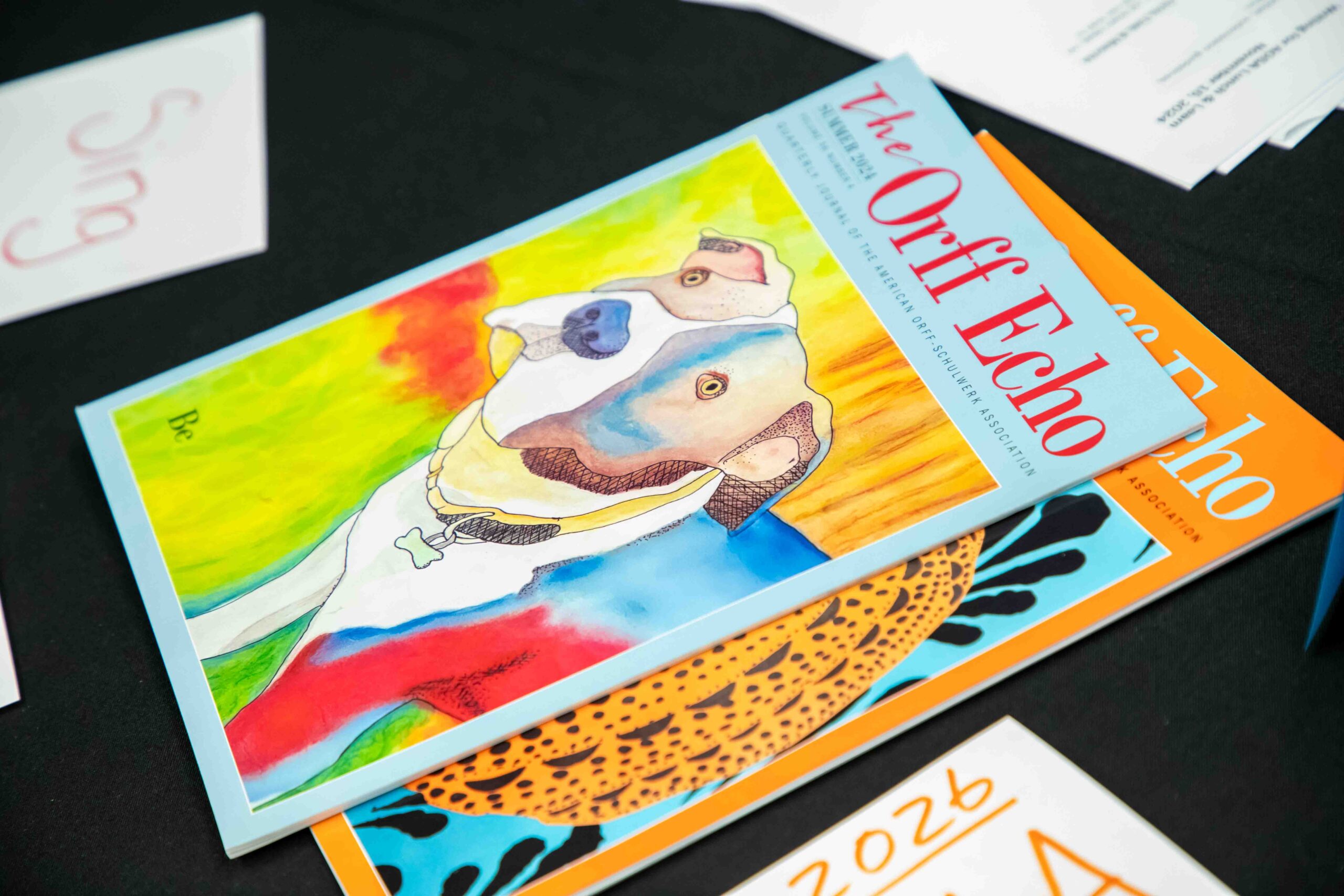
The Orff Echo is the national, peer-reviewed quarterly journal and philosophical voice of the American Orff-Schulwerk Association. Our mission is to demonstrate the value of Orff Schulwerk and promote its widespread use; to support the professional development of our members; and to inspire and advocate for the creative potential of all learners. Non-members may contact the editor for information.
Interested in writing for The Orff Echo? Check out how to get involved in the process:
Extensions to articles published in The Orff Echo can be found in the AOSA Resource Library.

List of Orff Echo Articles
Polyexene Mathey-Roussopoulou: a Portrait
Hamm writes about the career of Mathey-Roussopoulou and her influence on the Schulwerk.
Orff Schulwerk: Supplemental, Essential or Enrichment
The article is a response to an article by Tim Brophy in the summer 1993 Echo and also addresses concerns regarding the role of Orff Schulwerk in the schools.
Introducing Carol Erion
Bond introduces new AOSA President, Carol Erion, writing about Erion’s life and career to date.
Orff-Schulwerk: Past, Present, and Future
In this address given at the Canadian Orff Conference, Haselbach discusses the history of the Orff approach, the situation in 1993, and talks about her hopes for the future.
Focusing on the “Folk” in Folk Dance
Longden advises teachers to seek out cultural information before teaching folk dances.
Orff Schulwerk in the Creative and Performing Arts School
Brophy says that the concept of the creative and performing arts school and the teachings of Carl Orff go hand in hand.
A Coat of Many Colors
Simpson shares a folk tale from Mexico. The story offers possibilities for creative music and movement.
Focus on AOSA Research Activity
Fiedler discusses some of the research currently going on in the Orff world.
Texture: an Elemental Approach
Brown presents six teaching units about texture.
Follow My Leader
A canon about the seasons and an explanation of its original French origin.
Where Are Those Rhymes?
Tossi Aaron identifies sources of traditional rhymes that she believes are crucial to every child’s repertoire.
For the Classroom: Bill of Rights Rap
In this “For the Classroom” column, Gooden shows ways to teach a poem about the Bill of Rights
What is Real Music? Who Defines Real?
Goodkin discusses multiculturalism and suggests that we both isolate specific cultural experiences and recognize the common impulse toward artistic expression of all cultures.
An Ounce of Prevention, a Pound of Cure
Spalding discusses how to help the insecure adult singer.
AOSA: Taking Root
Hughes provides a brief history of AOSA and the Orff approach in the United States.
Ethnic Dance in the Classroom
The author discusses protocal for teaching appropriate dances from other cultures.