
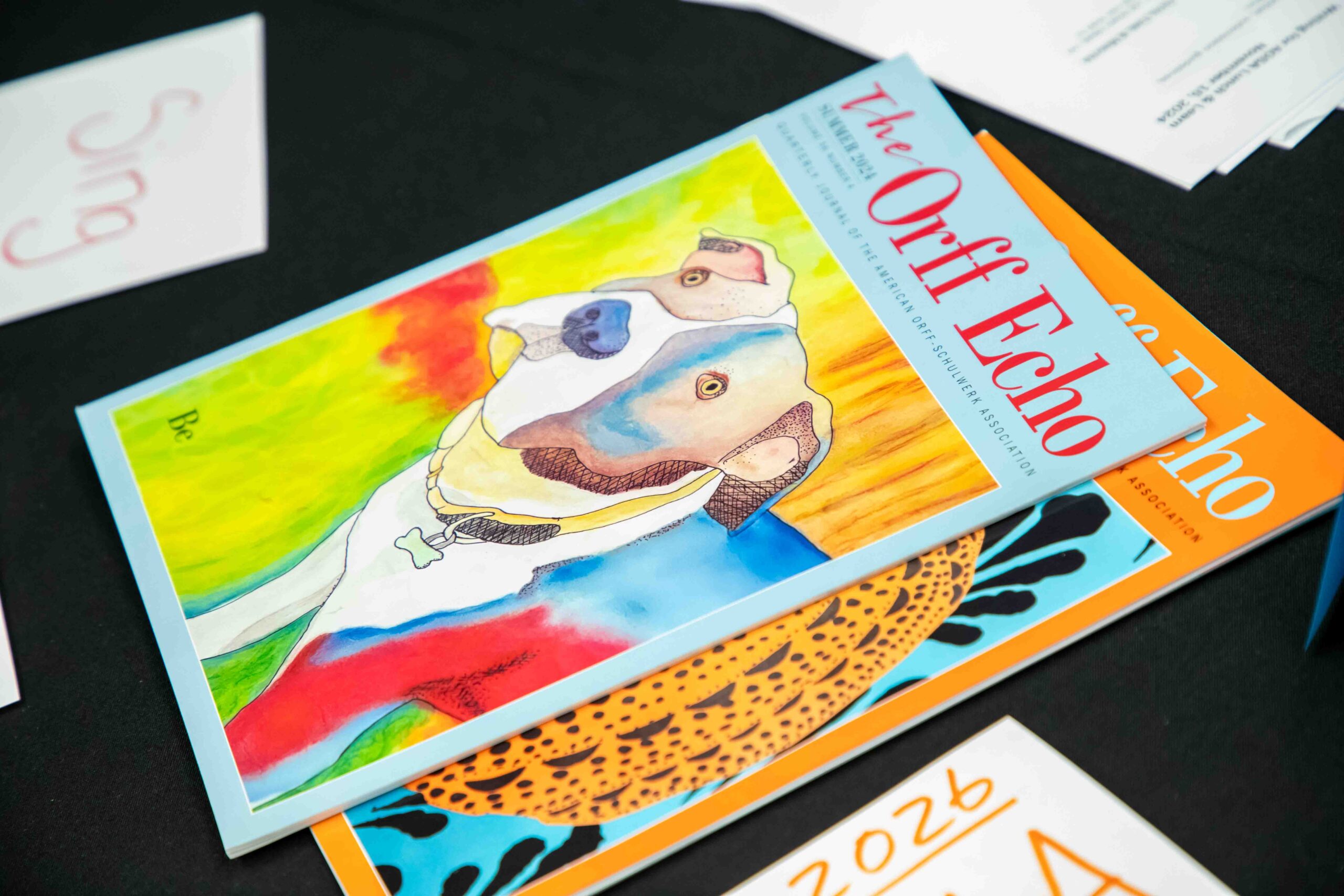
The Orff Echo is the national, peer-reviewed quarterly journal and philosophical voice of the American Orff-Schulwerk Association. Our mission is to demonstrate the value of Orff Schulwerk and promote its widespread use; to support the professional development of our members; and to inspire and advocate for the creative potential of all learners. Non-members may contact the editor for information.
Interested in writing for The Orff Echo? Check out how to get involved in the process:
Extensions to articles published in The Orff Echo can be found in the AOSA Resource Library.

List of Orff Echo Articles
A Case for Orff Schulwerk in Grades 7–12
The author discusses the use of the Schulwerk with music students in grades 7-12.
STRIVE-ing: Using Orff Schulwerk with Self-Contained Autism Students
The author tells about her work with autistic students in her music classes.
The Mexican Corrido in the Orff Classroom
Author examines experiences in his own classroom using the Mexican Corrido and its natural compatibility with the Orff Schulwerk approach due to its pentatonic melodies, elemental form, and organic nature.
An Appreciation of the Play Party and its Seamless Connection to Orff Schulwerk
The articles tells about uses of play parties for authentic American movement activities.
Remembering Our Why
The author makes a compelling case for how teachers can reflect on what motivates them throughout their teaching, especially in consideration of hardships that they might encounter. He offers practical recommendations that Orff practitioners can consider.
Why Not Dance?
Orff Schulwerk began as a seamless exploration of music, drama, and dance. The author questions why then, in today’s Schulwerk, the work “dance” is often replated with “movement” and offers suggestions for including building bricks of dance in our teacher education courses.
The Neurodivergent Orff Schulwerk Teacher
The author discusses the experiences of neurodivergent teachers and the creativity they bring to the Orff classroom. She describes how neurodivergent teachers benefit from Orff Schulwerk and how they can relate to students with similar experiences.
Teaching Through Chronic Illness: Solutions and Systems to Help You Thrive
The author’s personal experiences with chronic illness challenges frame empathy, workflow/time management, teaching strategies, and self-care considerations relevant to all teachers, including those with chronic illness, disabilities, pregnancy, and stress seeking balance and healthy lives.
Moments of Wonder: Exploring the Unexpected
Following student ideas through poetry, art, movement, math, writing, listening, nature, music, creating– ars inveniendi– opens serendipity and moments of awe beyond pre-planned lessons. Teacher flexibility, humor, and joy cultivate aesthetic experiences and social-emotional learning.
Integrating the Civil Rights Movement into the Music Classroom Using Children’s Literature
Teaching history integrated into music classrooms supports culturally responsive pedagogy, student engagement, cultural relevance, and anti-racist practices. Songs and picture books include We Shall Overcome and Lift Every Voice and Sing. Suggestions for further study.
A Place Inside of Me
Children’s Book Review: Picture book and Caldecott Award winner explores children’s complex emotional realities.
What If…
Children’s Book Review: Picture book presents possibilities facilitated by asking children “what if…”
Upbeat! Mindset, Mindfulness, and Leadership in Music Education and Beyond
Professional Development Book Review details practical ideas for mindfulness and leadership.
Who We Are
The author explores his identity as a musician, teacher, and culture bearer, coupled with who we can become as learners; he describes how Orff Schulwerk can benefit from literate, linguistic, and cultural pluralism.
Developing Resilience as Music Educators
The author offers frameworks and questions to help readers determine areas for self-care and in protecting personal time and needs. Music educators have demanding positions and developing resilience can help prevent burnout.
Network Associated Schools and Institutions of the International Orff-Schulwerk Forum Salzburg
Haselbach discusses the international network of Orff-inspired schools and other institutions that are assoicated with the Orff-Schulwerk Forum in Salzburg. Criteria for selection of the schools is discussed.