
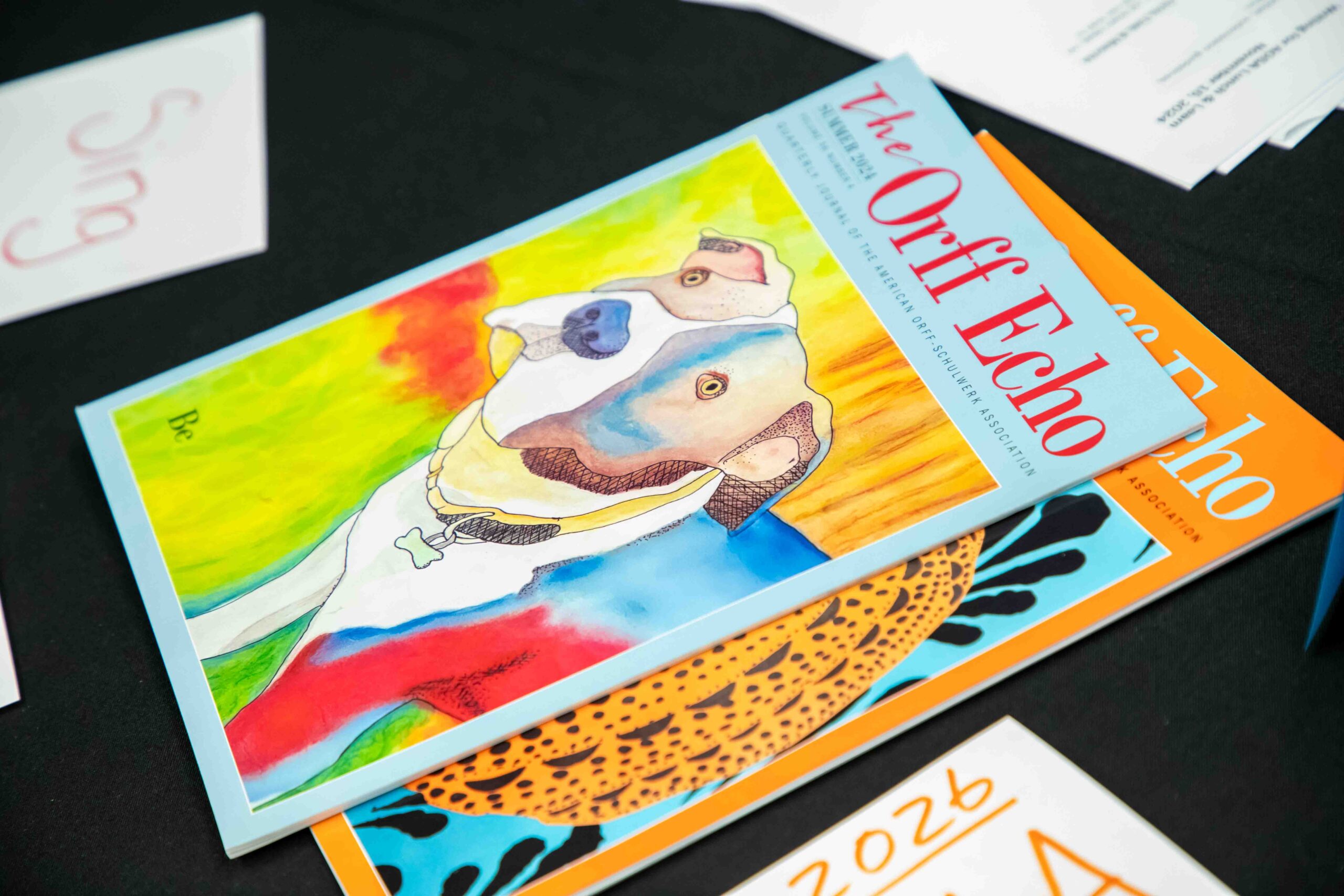
The Orff Echo is the national, peer-reviewed quarterly journal and philosophical voice of the American Orff-Schulwerk Association. Our mission is to demonstrate the value of Orff Schulwerk and promote its widespread use; to support the professional development of our members; and to inspire and advocate for the creative potential of all learners. Non-members may contact the editor for information.
Interested in writing for The Orff Echo? Check out how to get involved in the process:
Extensions to articles published in The Orff Echo can be found in the AOSA Resource Library.

List of Orff Echo Articles
Orff Schulwerk Past and Today in Greece
Provides an overview of Orff in Greece and describes in detail how the Schulwerk has been adapted to Greek meter, folklore, and instruments. Lesson ideas are included.
Echoes of a Musical Experience in Brazil
Shares the story of two music educators inspired by the Schulwerk, teacher education, and culturally sensitive pedagogy. The authors discuss integrating the Orff approach in a Brazilian context and learning about cultures around the world.
Tús Turais-Orff Schulwerk in Ireland
Discusses the growing interest surrounding the Schulwerk in Ireland and shares ideas on developing an Irish Schulwerk that infuses traditional music and culture with the contemporary music and culture of Modern Ireland.
Exploring Jeliya: Creative Possibilities With a West African Music Tradition
Discussion of the West African hereditary music tradition known as jeliya through three elemental qualities, text, arrangement, and
modes, and showcases ways in which it can be engaged in the classroom while avoiding the perpetuation of stereotypes.
Bringing Schulwerk to Galicia
Discusses challenges and benefits of connecting Galician folklore and the Schulwerk. Provides historical perspectives and cultural context of a traditional Galician celebration and ways to incorporate it in the classroom.
On the Road With Comenius and Orff
Provides overview of music education and Orff in the Czech Republic and importance of philosopher Komensky (Comenius). Authors discuss overlaps between Comenius’s philosophy and that of Orff; describes two lesson plans.
An Elemental Approach Toward K-pop Music and Culture
An overview of K-pop music and practical applications for the classroom.
Orff Research Webliography
Details the history of the AOSA webliography—research exclusively on the Orff approach. Accessed through the AOSA Resource Library.
The Elemental Style: A Handbook for Composers and Arrangers, Part 1
Professional Development Book Review: Provides a resource for all students of elemental composition.
Sources and Resources
An annotated list of biographical and musical sources and resources in Orff Schulwerk, 1930s-2019, curated by Jane Frazee.
Looking Outside Orff Schulwerk: Resources for Curriculum Design and Equity
A survey of resources outside of music education that might support Orff-inspired professional learning in curriculum design, culturally responsive pedagogy, and teaching for equity.
Magical Music & Timeless Tales: A Pandemic-Borne Collaboration
The story of collaboration in pandemic times of a partnership of a regional orchestra, university music department, school system, musicians, teachers, and students to bring music, inclusivity, diversity, creativity, through Orff-inspired lesssons using children’s literature.
A Living Compass for Orff Schulwerk Teachers
Classroom vignettes of flexibly, joyfully embracing creative inspiration from students, adults, objects, nature, and artistic encounters. Inspired by poet Mary Oliver’s Instructions for Living a Life: “pay attention”, “be astonished”, and “tell about it”.
Mapping Sources: Practicing Reflective Selection and Contextualization in Orff Schulwerk Classrooms
The author shares reflective practices for on-going evaluation and authentic sourcing of musical and classroom materials and open contextualization with students as part of culturally responsive teaching and empowering education.
Books and People: Sources for the Schulwerk
The author shares information on sources and resources where he and others gain inspiration for their teaching.
Early Comparative Musicology as Source to the Schulwerk Curriculum Design
Research of documents written during development of Music for Children indicate the influence of early comparative musicology informing the content, pedagogy, sequencing, organization, and teacher skills required to deliver the OS approach.