
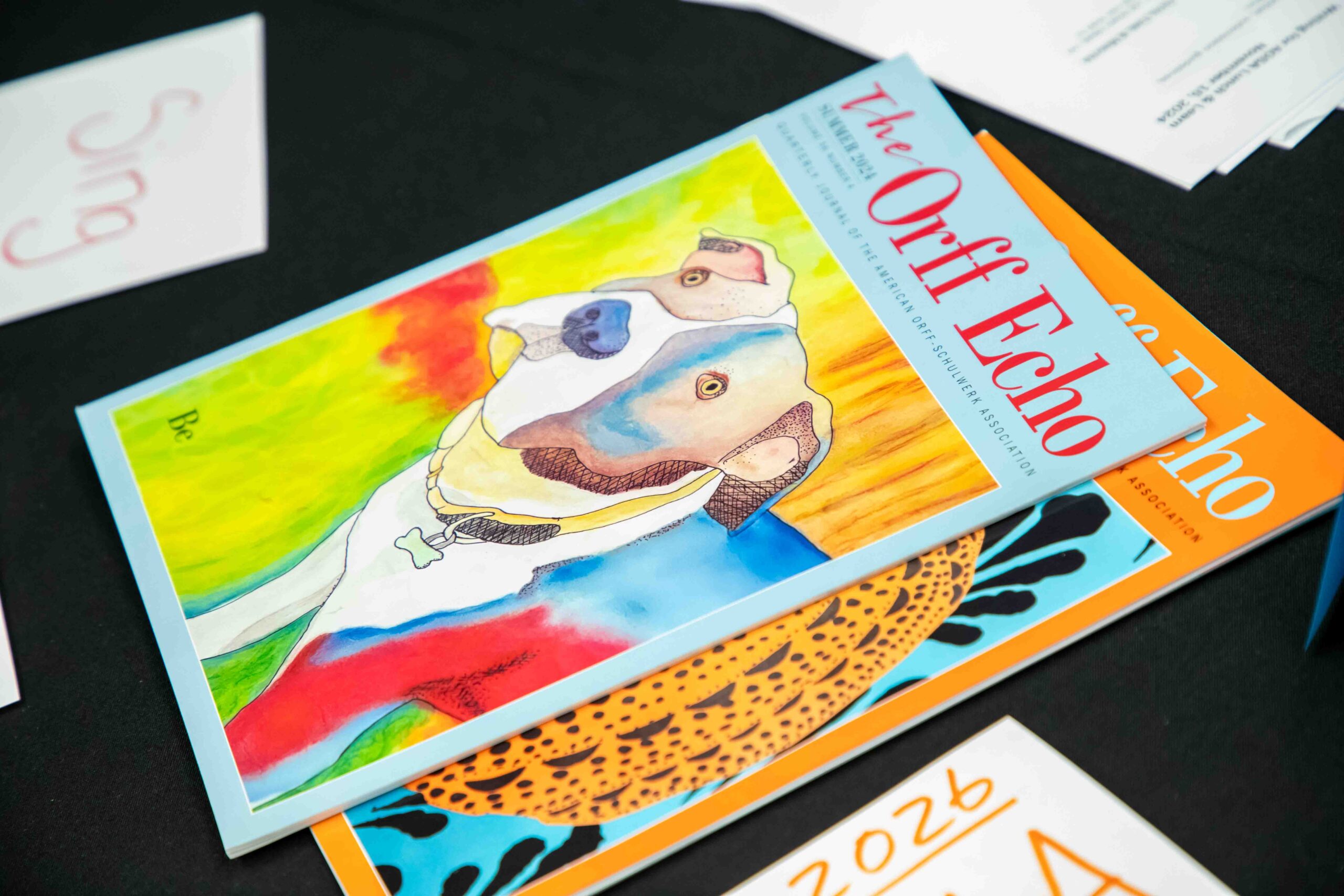
The Orff Echo is the national, peer-reviewed quarterly journal and philosophical voice of the American Orff-Schulwerk Association. Our mission is to demonstrate the value of Orff Schulwerk and promote its widespread use; to support the professional development of our members; and to inspire and advocate for the creative potential of all learners. Non-members may contact the editor for information.
Interested in writing for The Orff Echo? Check out how to get involved in the process:
Extensions to articles published in The Orff Echo can be found in the AOSA Resource Library.

List of Orff Echo Articles
Engaging Musical Practices – A Sourcebook for Elementary General Music
Professional Development Book Review: Explores research and practical suggestions applicable to the elementary general music classroom from 15 expert contributors.
Flipping the Script Through Orff Schulwerk
The author examines traditional goals and practices in music education and offers a counternarrative based on the principles of the Schulwerk.
Windows and Mirrors: Finding One’s Voice Through the Words
Trio explores the impact of literature, speech, and storytelling on character development, self-esteem, mindfulness, confidence, empathy, and mental well-being.
Cultivating Empathy Through Children’s Literature
The author shares practical ideas to cultivate empathy in children through the use of four children’s books and music.
An Interview With Master Storyteller Susan Ramsay
O’Hehir and Ramsey discover tips for the storyteller, including preparation and delivery, using visualization, plot outlines, gesture, cante-fable genres, stories with songs, ballads, and handdrum sounds to provide culturally authentic and responsive contexts and tales.
The Magic of Music Making: A Story of Destiny, Puppetry, and the Folk Spirit
MacAlpin’s self-study of Orff’s music and stage works,cantatas, fairy tale operas, led him to compose, stage, and produce intergenerational world theater music and dramas, and too craft and build marionettes, puppets, and their plays.
The Living Folksong Project: Building Community Through Song
Offers insights into incorporating musical repertoires representative of one’s students and community and discusses building relationships and sharing with culture bearers.
50 Years of AOSA: Telling Our Story
A comprehensive content analysis of the AOSA National Professional Development Conference examines presentation workshops from the last 50 years to identify trends and changes in offerings and discuss how they reflect the mission and values of AOSA and its membership.
I Lie to My Students
Beyond the Book: Short feature demonstrating the benefits of storytelling to enchant and engage young learners.
Once upon a Jungle
Children’s Book Review: Picture book telling the tale of the cycle of life in a gentle way that children can understand.
The Rooster Who Would Not Be Quiet!
Children’s Book Review: Picture book telling the tale of standing up for what we believe in, even in trying situations.
The Many Facets and Faces of Orff Process
This well-researched article focuses on how process is defined in Orff Schulwerk, focusing on commonalities and differences while offering alternative definitions and descriptions of what exactly process is and what other words we may use to describe how Orff Schulwerk educates and enables.
Crafting a Playful Process
The author provides a background and tools for balancing play and process in the classroom, with particular attention paid to student voice, multiple explorative entry points, and ensuring safety in risk-taking.
Play Is Not Just for Children
A look at the International Sunday Sharing group first started by JaSeSoi in 2020 during COVID-19 and a description of how the light-hearted and playful workshops kept spirits alive during a challenging pandemic.
Engaging With Orff Schulwerk: Elementary General Education Majors’ Experiences in a Music Fundamentals Course
Elementary education majors learn how the processes of teaching music reflect important teaching processes in general. Cross-curricular connections are readily available in the general classroom when using musical techniques, concepts, and skills.
Why We Imitate
Imitation is a foundational practice of the Schulwerk and the author explores the physiological and psychological implications of its application in the classroom and shares some important culturally responsive and social emotional outcomes as well.