
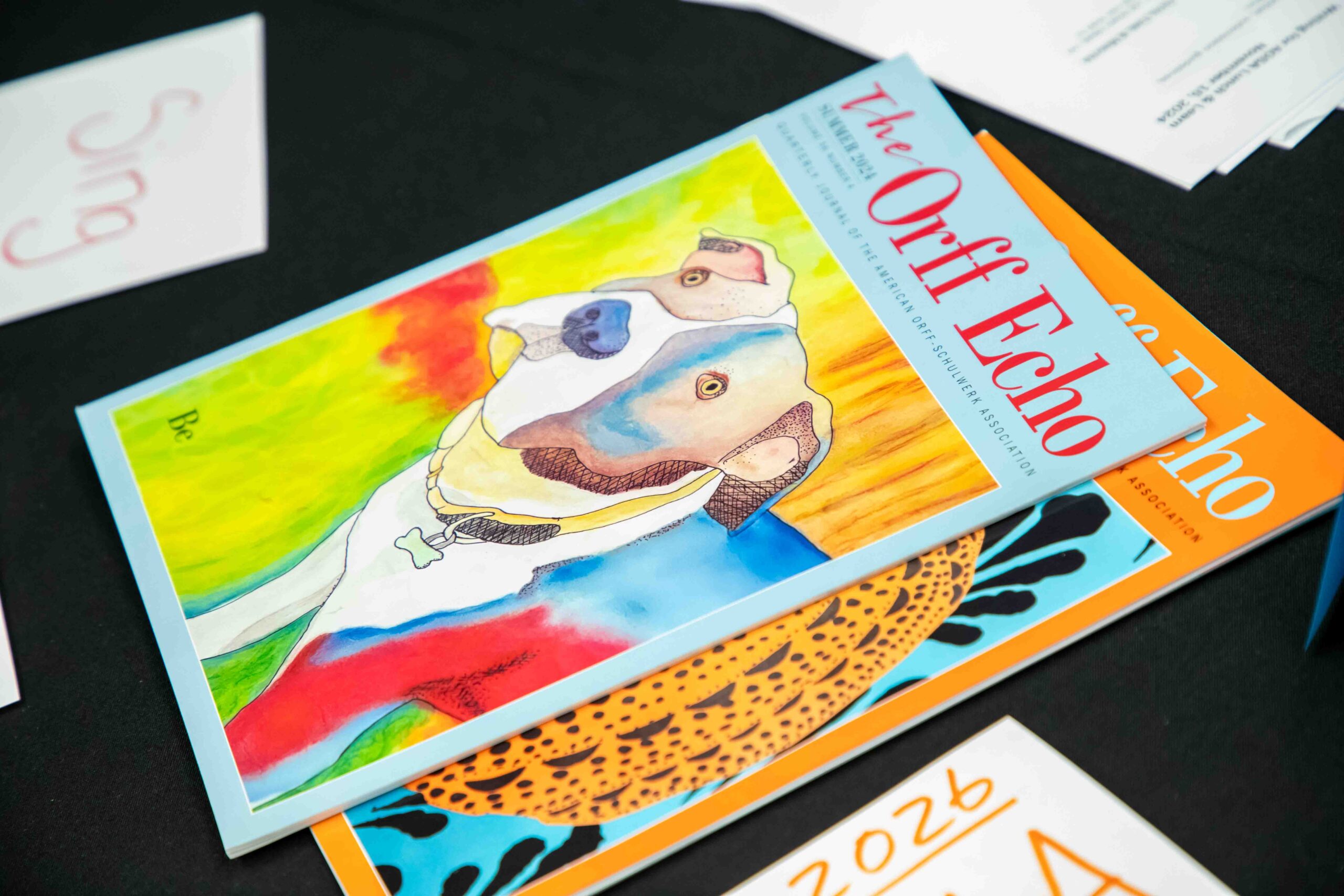
The Orff Echo is the national, peer-reviewed quarterly journal and philosophical voice of the American Orff-Schulwerk Association. Our mission is to demonstrate the value of Orff Schulwerk and promote its widespread use; to support the professional development of our members; and to inspire and advocate for the creative potential of all learners. Non-members may contact the editor for information.
Interested in writing for The Orff Echo? Check out how to get involved in the process:
Extensions to articles published in The Orff Echo can be found in the AOSA Resource Library.

List of Orff Echo Articles
Why Artistic Citizenship?
Exploring eudaimonia, music educators prepare students to make music as ethical action for the positive transformation of their own and others’ lives; they infuse school music with an “ethic of care.”
Little Loksi
Children’s Book Review: This children’s book, based on a story from the Chickasaw Nation, follows the problematic journey of a young turtle and how his diverse community gathered to offer him assistance. Included are the Chickasaw names for each animal with a glossary and pronunciation guide to help children correctly pronounce the language of this indigenous American tribe.
One Minute till Bedtime
Children’s Book Review: Anthology of witty, thought provoking, and just plain silly poems that, though intended for bedtime, are certain to inspire students to sing, say, dance, and play
Composing With Older Students: A Case for Songwriting with Ukulele Accompaniment
While not explicitly mentioned in primary Orff Schulwerk resources, teaching song-writing can be of value in an Orff Schulwerk classroom. One tool helpful in teaching song-writing is the ukulele, an accessible instrument that can have a valuable place in the general music classroom.
21st Century Orff Schulwerk: A Sustainable Approach to Music Education
Educational frameworks presented for general classroom teachers can be valuable and fit seamlessly into Orff Schulwerk process. Universal Design for Learning, Teaching for Understanding, Understanding by Design, 21st Century Education, and the Teaching Tolerance Anti-Bias Framework are examined with music-specific examples provided.
The Role of Popular Music in the Schulwerk
A discussion of how the characteristics and philosophy of Orff Schulwerk align with typical popular music education. Ideas for bringing pop music into the classrooms in positive and engaging ways are offered.
Banana Trees in Minnesota
Culturally relevant instruction occurs through the adaptation, not imitation, of materials. This article illustrates why the wildflower concept works well across diverse classroom contexts.
Integrating Steel Drums With the Orff Schulwerk Approach
Innovative instructional strategies for teaching steel drums to elementary school-aged learners.
Music Training Fosters Development in children With Specific Learning Disorders
Literature review on the effect of music and Orff process on students with learning disabilities that impair reading skills.
Orff Schulwerk, Informal Music Learning, and Creativity: A Mixed Methods Study
A mixed method survey about Orff teachers’ perspectives on the intersections of Orff Schulwerk, Informal Music Learning, and creativity. Results indicate that Orff Schulwerk teacher practices easily align with Informal Music Learning to promote creativity in students, although teachers would benefit from further exposure to this approach.
Becoming the Storyteller for Advocacy
How can you use your voice to impact change at the local, state, and federal levels? The author provides ways to craft your voice and tell stories that can impact policy and legislation regarding music education.
A Case for Movement in All Classrooms
Encouraged by the use of dance in the music room, creative movement and folk dance has a role to play in general education classrooms and arts integration spaces.
Wildflowers in the Desert: Establishing Music Programs in the Chula Vista Elementary School District
A discussion of building an elementary music program from scratch, administrative support, Orff levels courses, and other tools needed to start a program.
Creative Risk: Teachers First
Inspired by experiences in the Orff Institute special course, the author urges teachers to be adult learners and embrace intuition, creative movement, and improvisation as opportunities for self-discovery.
One Hundred Hungry Ants
Children’s Book Review: Students might act out the story, add an expanded song as the ants march, join in on longer portions of the rhymes, or improvise the rhymes on instruments.
Muncha! Muncha! Muncha!
Children’s Book Review: Candace Fleming, with onomatopoeia and entertaining word play, relays another hare raising adventure.