
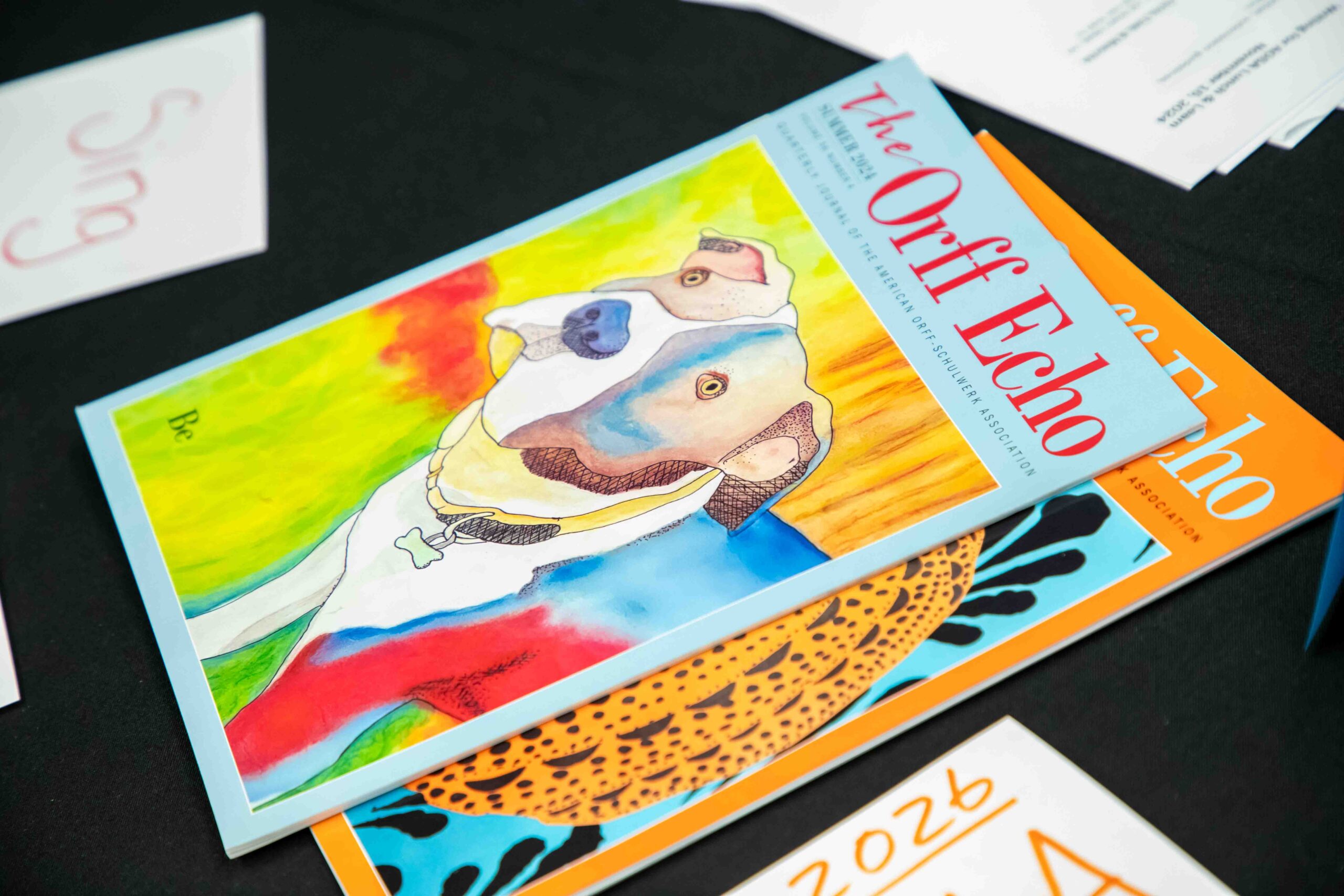
The Orff Echo is the national, peer-reviewed quarterly journal and philosophical voice of the American Orff-Schulwerk Association. Our mission is to demonstrate the value of Orff Schulwerk and promote its widespread use; to support the professional development of our members; and to inspire and advocate for the creative potential of all learners. Non-members may contact the editor for information.
Interested in writing for The Orff Echo? Check out how to get involved in the process:
Extensions to articles published in The Orff Echo can be found in the AOSA Resource Library.

List of Orff Echo Articles
Becoming the Storyteller for Advocacy
How can you use your voice to impact change at the local, state, and federal levels? The author provides ways to craft your voice and tell stories that can impact policy and legislation regarding music education.
A Case for Movement in All Classrooms
Encouraged by the use of dance in the music room, creative movement and folk dance has a role to play in general education classrooms and arts integration spaces.
Wildflowers in the Desert: Establishing Music Programs in the Chula Vista Elementary School District
A discussion of building an elementary music program from scratch, administrative support, Orff levels courses, and other tools needed to start a program.
Creative Risk: Teachers First
Inspired by experiences in the Orff Institute special course, the author urges teachers to be adult learners and embrace intuition, creative movement, and improvisation as opportunities for self-discovery.
Elementaria
Professional Development Book Review: Gunild Keetman’s introduction to Orff Schulwerk is a key to understanding the primary source material found in the Music for Children volumes as well as Erstes Spiel am Xylophon, Spielbuch für Xylophon, and Rhythmisch Übung. It is a must read for all OS teachers.
Teaching with Vitality: Pathways to Health and Wellness for Teachers and Schools
Professional Development Book Review: This book touches upon many different aspects of school communities, with honest talk about difficulties that can be encountered and straightforward suggestions for solutions.
Back to Basics
Connection to the cross-curricular, general classroom pedagogy of Reggio Emilia and Project Zero and description of an annual “Back to Basics” professional development workshop for new and experienced practitioners.
Beyond the Basic Building Bricks
Keetman’s elemental rhythm blocks are expanded to include the anacrusis in diverse children’s names.
Facilitating Music Making Through Cognitive Apprenticeship in the Orff Schulwerk Tradition
Practical implimentation of Cognitive Apprenticeship instructional design within Orff Schulwerk that includes modeling,exploring, scaffolding, coaching, articulating, reflecting, and learner centered approach.
STEAM and Orff Schulwerk: Fueling Creativity
Connection between STEAM and the Orff Schulwerk including the Four Fundamental C’s (creativity, collaboration, communication, creative thinking). Authentic integrated student centered experiences that expand to including ‘care’ as a vital part of both approaches.
From the Classroom – Beyond K-12: Orff Pedagogy and Performance Applications at the University Level
Effective college teaching requires integrative, hands on, differentiated strategies for engagement and reaching all student learning styles. Applications of OS in teaching world music, classroom music for children, and university classes.
Teaching Vocal Jazz Concepts in the Schulwerk-Inspired Elementary Music Classroom
Strategies for teaching vocal jazz pair well with Orff Schulwerk processes, and repertoire in the genre can be used in elemental arranging, teaching swing style, and vocal jazz harmonies, and improvisation.
The Wisdom of Uncertainty: The Next 50 Years of AOSA
Reflections on practicing artistry in the music classroom, blending historical, traditional, contemporary, and innovative techniques in the Orff Schulwerk process
Re-imagining Orff Schulwerk Through the Lens of Cultural Competence
A fundamental principle of AOSA is the organization’s Diversity Statement. This article clearly articulates the organization’s commitment to this principle and describes the essence of diversity education as it relates to music educators.
Bats At the Beach
Children’s Book Review: Rhythm and rhyme combine in this fun picture book to tell the story of what bats do on vacation. The text offers opportunities to create chants, simple melodies, or ostinati.
Snow
Children’s Book Review: This picture book provides inspiration and opportunity for students to explore movement, melody, and expression.