
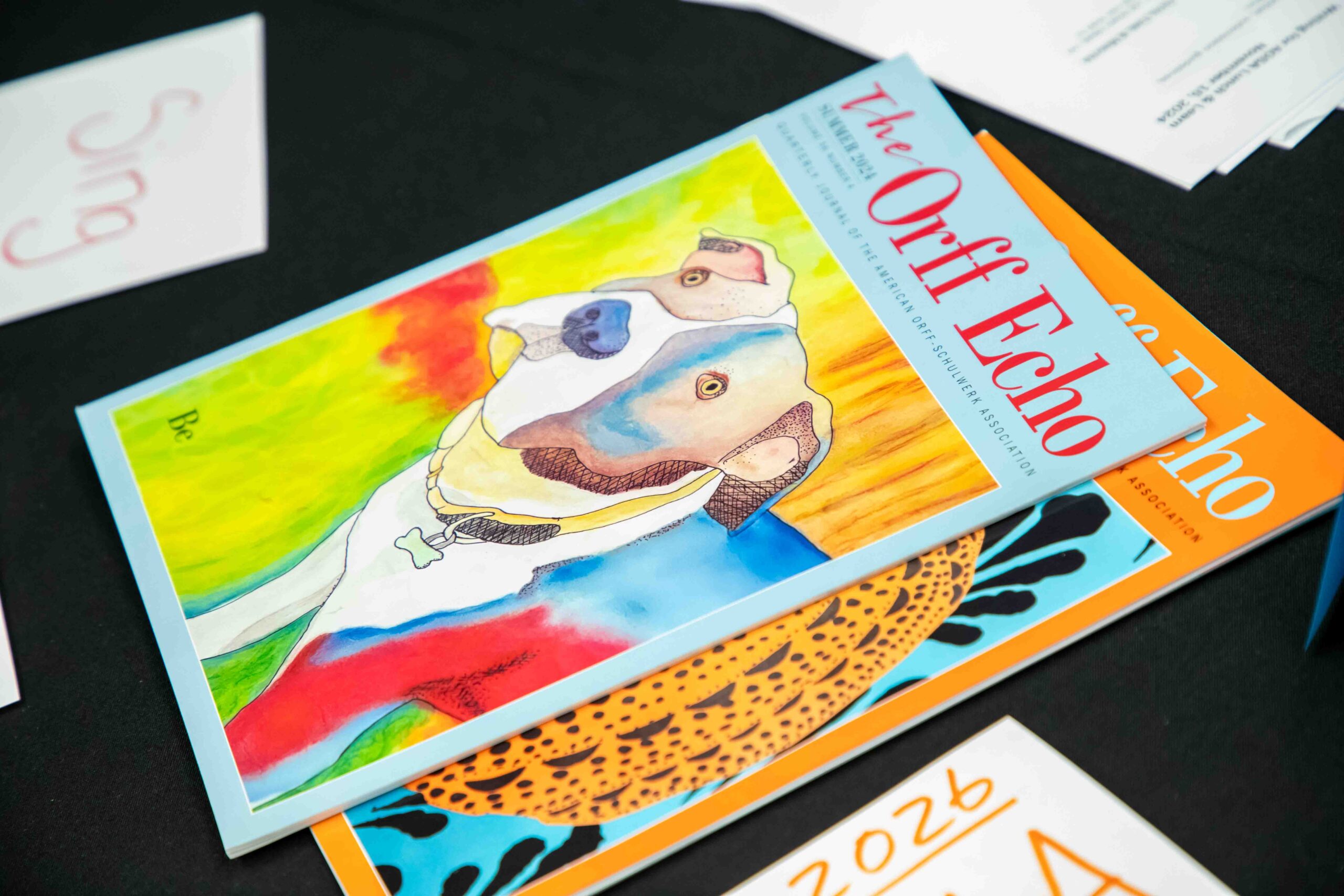
The Orff Echo is the national, peer-reviewed quarterly journal and philosophical voice of the American Orff-Schulwerk Association. Our mission is to demonstrate the value of Orff Schulwerk and promote its widespread use; to support the professional development of our members; and to inspire and advocate for the creative potential of all learners. Non-members may contact the editor for information.
Interested in writing for The Orff Echo? Check out how to get involved in the process:
Extensions to articles published in The Orff Echo can be found in the AOSA Resource Library.

List of Orff Echo Articles
It Began with “Wir senden den Schulfunk …”
Exploring Tonal Landscapes
Mix up tonal landscape in Orff Schulwerk-inspired music rooms using pentatonic modes. Advocates for integrating pentatonic modes beyond do-centered pentatonic into lessons and classroom music making. Shares instructional design approaches to teaching, using barred instruments and recorders.
Pentatonic Modes, Orff Schulwerk, Improvisation, Exploration, Elementary Music
First Steps in Jazz and Orff Schulwerk
Students’ musical experiences and creative development can be facilitated by the integration of jazz into Orff Schulwerk-inspired music education by drawing from established pedagogical practices and resources. Offers practical strategies for educators to foster a supportive environment for improvisation.
Jazz, Orff Schulwerk, Improvisation, Elementary Music, Blues
National Core Standards Series: Create
Classroom activities based on National Core Standards Series (NCAS): Creating.
“Yes, and . . .”: Growing Awareness and Collaboration with Theatre Improvisation Principles
Using theatre improvisation “rules” and Dalcroze Eurhythmics is an effective means for developing students’ awareness of others and building skills necessary for musical and creative collaboration. In this article, the author offers examples and suggestions for applying this process when working with students from the young child to elementary school through college and beyond.
Orff Schulwerk, Dalcroze and Orff, theatre improvisation and teaching music, music education collaboration, teaching for student awareness, Spolin theater games and music education
Montessori-Orff: Creating a Unique Music Curriculum for Independent Students
Integrating the Montessori Method and Orff Schulwerk to support independent learners in elementary music
Montessori, Orff, Elementary Music, Independent Learning, Manipulatives
Creating the Minnesota Orff Course
Brief history of Minnesota Orff Schulwerk course. Showcases Minnesota as an example to highlight significant cross-pollination between various Orff Schulwerk dispersal sites. Transfer of knowledge and tradition between geographic regions continues to contribute to the rich and dynamic nature of Orff Schulwerk throughout the United States and North America.
Orff Schuwerk, Minnesota Orff, University of St Thomas, Jane Frazee, AOSA history, Orff dispersal in North America, Orff course history, Jos Wytack
Meaningful Movement Connection: In-Person and Virtually
Seeking the connections between Orff Schulwerk and Dalcroze Eurythmics in in-person and virtual instruction benefits students’ musicianship
Stick and Stone
Children’s Book Review: Picture book relates unusual friendship and dispatching a bully.
Squeak, Rumble, Whomp! Whomp! Whomp! A Sonic Adventure
Children’s Book Review: Picture book relates sounds in childhood life of Wynton Marsalis.
The Music Teacher’s Guide to Engaging English Language Learners
Professional Development Book Review: Timely resource for music educators committed to creating inclusive classrooms
“Combination Approaches: Problem or Solution?”
A daily routine for elementary music teachers connecting the Orff and Kodály processes.
National Core Arts Standards Standards in the Classroom: Connect
Models of classroom activities based on National Core Arts Standards (NCAS): Connect.
Orff Explorations in the Basque Region
How Orff Schulwerk educators can engage students in exploring the language of Euskara, discovering cultural connections through games, practicing improvisation and technique, and participating in expressive, choreographed movement activities.
Singing Is, Afterall, Storytelling
Case study on integrating children’s literature with music instruction.
Connecting Experiences
Fostering shared experiences by overcoming language barriers through sounds, visuals, paraverbal communication, music, and movement.