
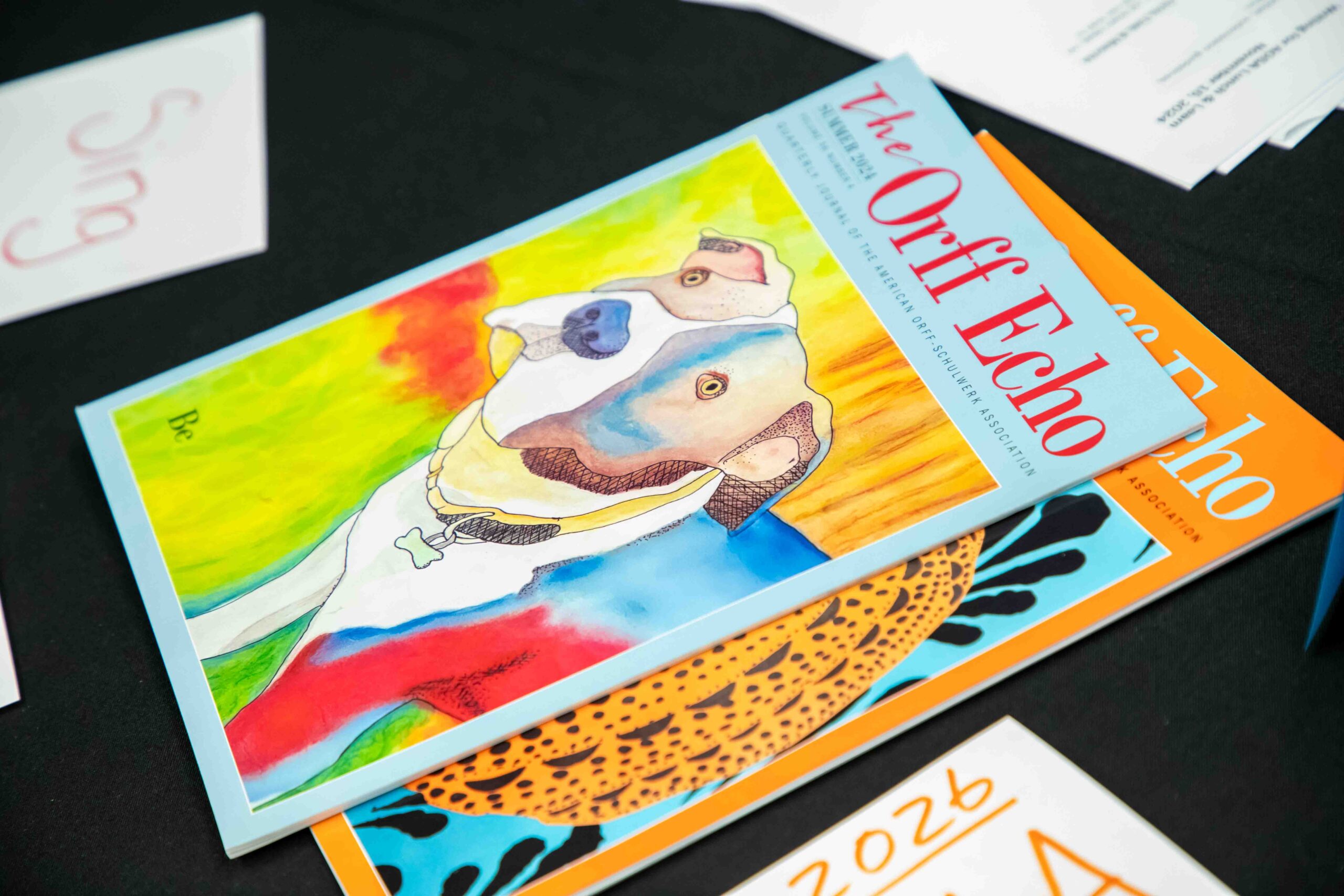
The Orff Echo is the national, peer-reviewed quarterly journal and philosophical voice of the American Orff-Schulwerk Association. Our mission is to demonstrate the value of Orff Schulwerk and promote its widespread use; to support the professional development of our members; and to inspire and advocate for the creative potential of all learners. Non-members may contact the editor for information.
Interested in writing for The Orff Echo? Check out how to get involved in the process:
Extensions to articles published in The Orff Echo can be found in the AOSA Resource Library.

List of Orff Echo Articles
Life Is Like a Box of Chocolates: Using Orff Schulwerk With Summer Fine Arts Camps
Reflection on the challenges and rewards of applying the Orff approach to summer children’s camps with participants of varying age, ability, perseverance, and commitment.
Instrumental Directors Can Use Orff, Too
Strategies and benefits of incorporating Orff Schulwerk techniques into beginning band and orchestra classes.
The Museum
Children’s Book Review:This picture book takes us along with a little girl on her trip through an art museum where the illustrations represent famous artists and their works, and is a reminder that painters, poets, and musicians inspire each other.
The Magic of Silence: From Carnegie Hall to Your Classroom
Develop musicianship, and ensemble awareness skills. Guide students to understand the value of silence in performance skills using “bubble silence.” Setting the context of singing and appropriate ensemble behavior to generate a powerful result. Explore silent movement.
Silence and Stillness: Moving to Internal Rhythms
Stillness allows for fresh ideas to emerge. Unaccompanied movement allows for individual creativity empowering the dancer to respond to cues from within. Games and warmups are a gentle way to introduce the concept of silence.
Visibly Still: Using Silence and Movement to Develop Inner Hearing in the Dalcroze Classroom
Silence allows students to activate their inner hearing, to experience the music within, and to recall and feel what recently occurred, or predict pitch, tempo, and rhythm for what is about to come through purposeful movement, solfège, and improvisation .
The Sound of Silence in the Music Classroom
Setting classroom expectations and environment. Embracing silence to allow time to process and allow for detaching emotion. It is in our voice and body.
Avon Gillespie and the Silent Realm of Teaching
Silence begins where words end. A Bantu piece, Somagwaza, taught with a wordless approach, uncluttered, wholly engaging, positive gestures, motion of the eyes and teaching in mime.
Hush! A Thai Lullaby
Children’s Book Review: A mother tries to coax her baby to sleep while also trying to quiet the noisy animals of the Thailand forest. The animal sounds in Thai invite vocal exploration in a new language.
The Fertile Ground: The Value of Floor Work and Sensory Awareness in Orff Schulwerk
It starts with babies and exploring how they move. Body awarness and personal explorations using the floor to discover awarness of movement. Rolling and breathing allow for developing functional clarity.
Is the Eye the Enemy of the Ear? The Unsettled Issue of Literacy in the Orff Approach: Part II
This article features responses from three Orff experts to Jane Frazee’s question presented in The Orff Echo Fall 2016 issue: “Do you think that, in the long run, time spent on learning a symbol system is necessary at all?”
Teaching General Music: Approaches, Issues, and Viewpoints
Professional Development Book Review: A book that balances prevailing theories and contemporary issues in music education.
Silence
Children’s Book Review: This picture book offers readers time to stop and reflect on the quiet that opens the door to exploring what has been blocked by the sounds all around us and enables us to be mindful.
The Joy and Magic of Baby Orff
Using the Orff approach with babies and toddlers, benefits their development, resulting in increased coordination, higher self-awareness, and socialization. Suggested activities build relationships, and introduce young children to musical elements and their world.
Music and Creative Movement for Special Needs Children
Movement, or dance therapy, as pioneered by Marian Chace and Norma Canner, can be used to help special needs students to express themselves physically and emotionally, through playful, guided music, and movement experiences.
Children’s Storybooks to Address Speech and Language Challenges
Storybooks can be used to support students with communication disabilities, including hearing, language, or speech disorders. Provided examples contain diverse objectives and well-designed orchestrations to demonstrate how these students may successfully participate.