
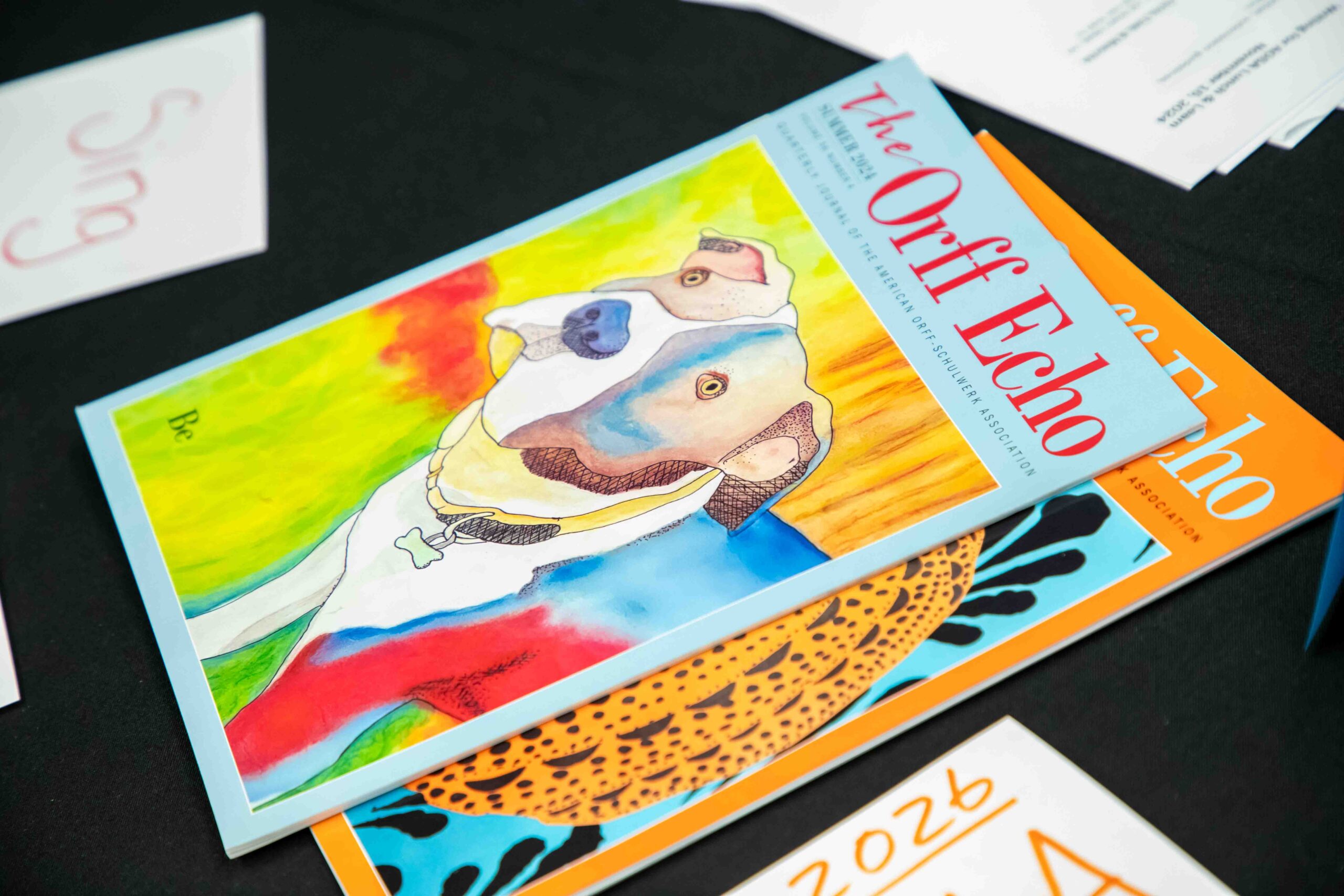
The Orff Echo is the national, peer-reviewed quarterly journal and philosophical voice of the American Orff-Schulwerk Association. Our mission is to demonstrate the value of Orff Schulwerk and promote its widespread use; to support the professional development of our members; and to inspire and advocate for the creative potential of all learners. Non-members may contact the editor for information.
Interested in writing for The Orff Echo? Check out how to get involved in the process:
Extensions to articles published in The Orff Echo can be found in the AOSA Resource Library.

List of Orff Echo Articles
Folk Song Structure… Folk Tale Structure… Practice Structure
The author discusses how to teach, and how children might practice, folk material.
From the Classroom: A Russian Fairy-Tale Musical Compostion Listening Lesson
An active music-making lesson idea inspired by the “Kikimora” Symphonic Poem for Orchestra by Anatol Liadov.
The Recorder through the Ages: A Historical Survey
Author Peskin explores the rich and remarkable history of the recorder in an accessible historical perspective.
A Movement Approach to Teaching Beginning Recorder
Gilpatrick shares techniques using motoric learning processes that prepare the body before introducing recorder, leading to greater beginner success.
Tackling Technique
Artist-level recorder player and teacher offers valuable ideas for teaching playing technique to students in large group settings.
Beginning Recorder Players Can Also Compose!
Erion provides inspiration and practical format to lead beginning players into creating compositions for recorder.
Rediscovering Volume I through the Alto Recorder
Hug gives vision and practical ideas for using material in Volume I to introduce the alto recorder.
Point-Counterpoint: Is It Appropriate to Notate Non-Western Music
AOSA members share perspectives on the importance of respecting the traditional from which music originates.
Orff Schulwerk in South Africa
1997 South African music education is detailed by author Schiff who reflects on the work of Dr. Komla Amoaku and his approach to African music via Orff.
The Arts: Instruments of Change
Dr. Amoaku promotes storytelling and song as a way to teach traditional subjects, utilizing the arts as an instrument of change and growth.
“Music for Children” in Another Culture
Author details challenges for institutionalized Romanian special needs children. Charity Muzika is based on the belief that everyone has the right to be recognized as having artistic creativity at the center of their being.
Freedom and Change in Lithuania
Author brings focus to the oppressive days of the Cold War and efforts required to sustain musical culture and language.
Orff Schulwerk, Your Way and My Way
Author Yaginuma facilitates investigation of the senses by children, nurturing and developing creativity and sensitivity.
Sacred Sounds from the Morning of the World
Author Cole explores the personal journey of having a Balinese gamelan created.
Beginning Javanese Gamelan: A Community of Listeners
Author provides hands-on information for introduction of Javanese Gamelan.
Point-Counterpoint: Schulwerk Volumes – Core or Obsolete?
AOSA members respond to the question, “Do you consider the Orff Schulwerk Volumes to be obsolete, or are they at the core of the Schulwerk?”