
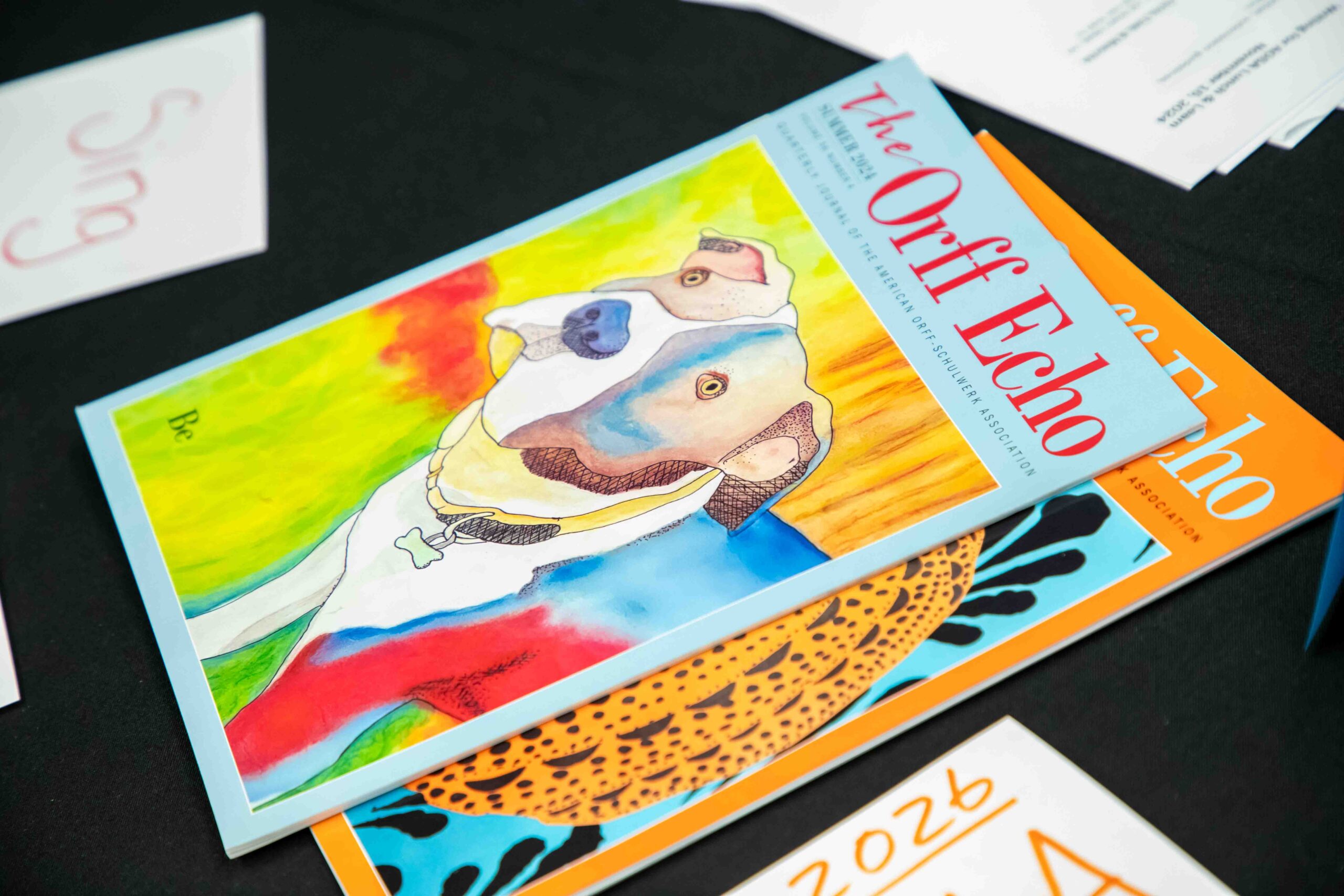
The Orff Echo is the national, peer-reviewed quarterly journal and philosophical voice of the American Orff-Schulwerk Association. Our mission is to demonstrate the value of Orff Schulwerk and promote its widespread use; to support the professional development of our members; and to inspire and advocate for the creative potential of all learners. Non-members may contact the editor for information.
Interested in writing for The Orff Echo? Check out how to get involved in the process:
Extensions to articles published in The Orff Echo can be found in the AOSA Resource Library.

List of Orff Echo Articles
Focus on Research – Researching Cross Cultural Applications of Orff Schulwerk: Reflections on Mary Shamrock’s Research
Robbins revisits research done by Mary Shamrock to identify issues and challenges that were addressed.
Focus on Research: Inclusion in the Music Classroom or Inclusive Music Instruction
Hunter reviews research on best practices in working with exceptional children and offers a list of “Keys to Successful Inclusion.”
Emotional Intelligence
Professional Book Review: Goldman gives a brief summary of brain development and then discusses how emotions regulate behavior. He advises that training of “emotional intelligence” should begin early in life.
Orff Schulwerk, Inclusion and Neurological Disorders
This article offers concrete suggestions for how Orff Schulwerk can become a tool to to work with children who face challenges with speech, movement, auditory processing, and other learning exceptions.
Me? Work With Orthopedically What?
A music teacher who works with students who have orthopedic challenges, such as cerebral palsy or other trauma, shares her experience and ideas for meeting the needs of these exceptional learners.
The Orff Approach and the Hearing Impaired
The author shares exercises in relaxation and breath control that prepare the hearing challenged student for learning through musical activities. The article includes models for listening, speech, singing, movement, social skills, and instrument play.
Special Songs…Special Kids: Learning Opportunities for the Special Learner
When working with students with special needs, the author offers the sage advice to “never underestimate these students!” The article includes lesson ideas and models that have worked with these exceptional children.
Books – A Springboard to Composition
The author shares strategies for turning picture books into lessons on music composition.
From the Classroom: Seeing Stars
Gilpatrick added glow-in-the-dark stars and a “campfire” to her classroom and these props became a source of unplanned lessons.
Sound Education: The Journey From Hearing to Listening
Don Campbell explains that shifting thinking about the technical aspect of music performance to the importance of listening makes music more accessible to all learners regardless of “talent.”
Listening, Spirituality, and The Musical Ear: The Tomatis Method
This article describes the Tomatis method that differentiates between listening and hearing. This approach links the ear, listening, and spirituality and offers insights for Orff Schulwerk teachers.
Listening to Learn
Harwood states that “listening is moving,” an idea very consistent with an Orff Schulwerk classroom. She also encourages beginning a listening experience with the whole, rather than in part, and planning for repeated listening of the same material.
Music Listening: Lessons from Kabalevsky
In addition to being a prominent Russian composer, Kabalevsky was an influential music advocate and educator. Gorny discusses the Kabalevsky approach to active listening in the music classroom.
Breaking the Listening Barrier
Siebold shares several approaches she uses in to prepare children to listen with understanding in the music classroom. Includes a resource list.
Listening Lessons: Are You Missing Vital Entry Points
Nelson applies five entry points to learning, identified by Howard Gardner, to listening lessons in the music classroom.
Help for the Dyslexic Child: More Good News for Music Education?
This guest editorial shares ways in which music activities that are typical in and Orff classroom may help auditory skills for students with dyslexia.