
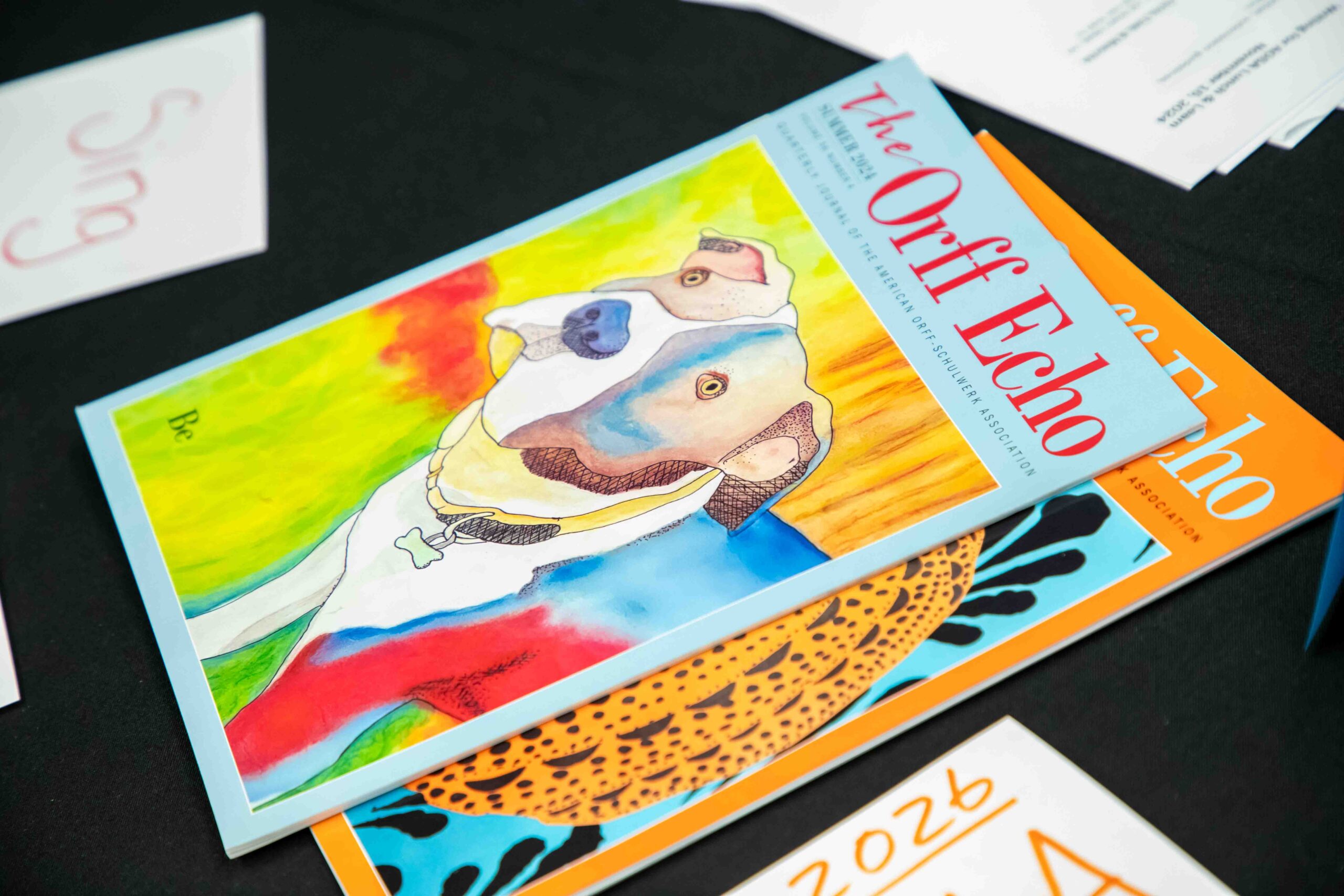
The Orff Echo is the national, peer-reviewed quarterly journal and philosophical voice of the American Orff-Schulwerk Association. Our mission is to demonstrate the value of Orff Schulwerk and promote its widespread use; to support the professional development of our members; and to inspire and advocate for the creative potential of all learners. Non-members may contact the editor for information.
Interested in writing for The Orff Echo? Check out how to get involved in the process:
Extensions to articles published in The Orff Echo can be found in the AOSA Resource Library.

List of Orff Echo Articles
Embracing the Modes
Giebler discusses the use of modal pieces in Music for Children.
Elemental Origins: the Guntherschule in the Context of the German Body Culture
Hepburn discusses the various movements in Germany between 1880 and 1930 that supported a healthy lifestyle, especially through movement, including the Guntherschule.
Extending the Modes
Using many examples, Calantropio provides a study of the modes and how they could be used in the Schulwerk.
An Elemental Aproach to Composition: Guiding Student Composers
Burgess shows how she uses Bloom’s Taxonomy as a framework for meaningful composition by her students.
Is it Elemental?
Purdum discusses the meaning of the term elemental with the goal of using this as a tool to choose songs and instrumental pieces for our students.
Learning Pieces or Opening Doors? Recorder in the Schulwerk
Former AOSA President, Jo Ella Hug, stresses the importance of Orff Schulwerk teachers being able to play recorder competently.
Making the Most of Folk Songs: Analysis Within the Schulwerk
Schlieker discusses the importance of carefully analyzing folk songs before using them in the classroom. She provides a detailed analysis procedure.
Using Orff Schulwerk Elemental Principles Within a High School Ensemble Setting
Gold describes how he used elemental principles from his Orff Schulwerk training with a high school jazz ensemble.
God Bless the Child
Children’s Book Review: Using the backdrop of the blues song text, this picture book tells the story of an African American family journeying from the rural South to the urban North during the Great Migration in the 1930’s.
From the Classroom: Teaching Folk Dance in Middle School
Finn gives step-by-step procedures for teaching folk dance to middle school students.
The Rest is Noise: Listening to the Twentieth Century
Professional Development Book Review: This book is exhaustive and informative enough to be used as a text for a college course on twentieth-century music, yet it is engaging enough to be enjoyed by anyone with an interest in the destructive and redemptive nature of the music and history of the twentieth century.
Teaching Classical Music as a Dynamic and Multifaceted Art
Bringing classical music as a living art to students prepares them to know works deeply and well, to build understanding of the ways that musical forms work, and to instill the desire for further experiences.
Memorable Journeys
Once teachers have identified the art music to present, the Orff process — imitation, exploration, and improvisation — provides a solid framework for a memorable journey.
Classical Music Connections
Lesson ideas based on four works of music from the classical repertoire.
Selecting Music for Purposeful Movement
Two Dalcroze teachers discuss how to use classical music to teach basic music concepts. Includes list of music selections paired with music skills.
Orff Schulwerk in the Music History Classroom
A university instructor brings active music making into a college course on music history.